
From Shadow to Substance
A Catholic View on Old Covenant Sacrifice
Understanding the Ancient Sacrifices
To our modern eyes, the animal sacrifices of the Old Testament can seem strange. But for Catholics, these ancient rituals were not primitive customs. They were a profound and necessary lesson from God, a "fatherly instruction" designed to teach humanity the language of salvation.
The system was born from a "crisis of communion." When God's glory filled the tabernacle, the Bible says that "Moses was not able to enter" (Exodus 40:34-35). Sinful humanity could not stand in the presence of a holy God. The sacrificial system was God's loving answer to this problem.
This system was never for God's benefit (Psalm 50:8-15). It was for ours. It was the special way God gave His people to approach Him, ask for forgiveness, and allow His holy presence to "dwell among them," all while teaching us a core principle of our faith: God uses physical, created things, like water, oil, bread, and wine, to give us invisible, divine grace.
Part 1
Why Did They Start?
The Law as a "Fatherly Instruction"
The ceremonial law, with all its detailed rules, was a "schoolmaster." It was designed to teach Israel four crucial lessons that would prepare them for Christ:
- The Holiness of God: The careful rules for worship in the Book of Leviticus taught the people that God is "other." He is pure, perfect, and transcendent, and we must approach Him with reverence and awe.
- The Seriousness of Sin: The sacrifices were a powerful reminder that the cost of sin is death. When an Israelite placed his hands on the animal (a ritual called samak), he was identifying with it. He was being taught that "what is happening to this animal is what is due in justice to me." Forgiveness is not cheap; it is costly.
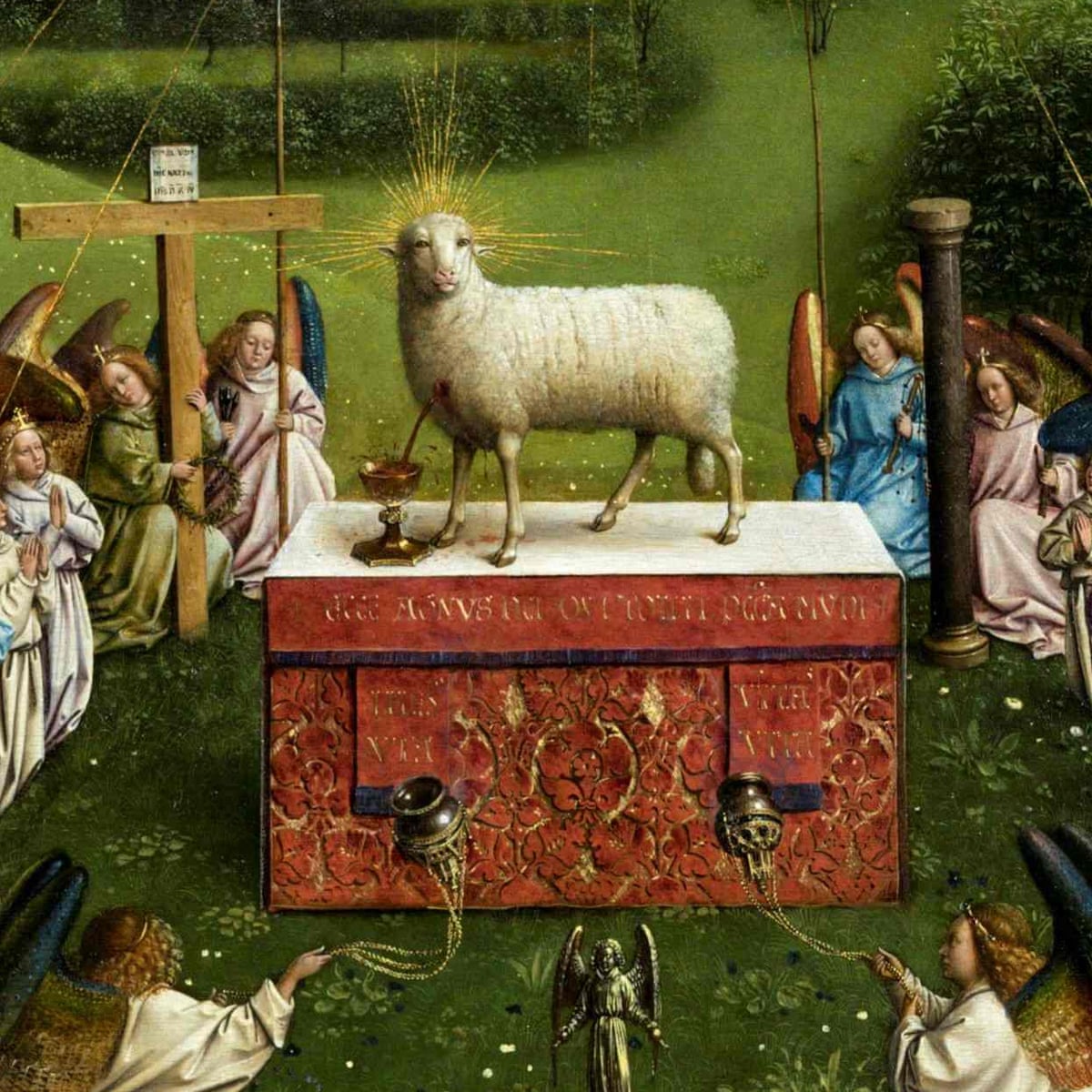
- The Idea of Substitution: The system was built on the idea of an innocent, "unblemished" animal standing in for the guilty sinner. This prepared the world to understand Christ, the innocent "Lamb of God," who would one day stand in for all of us.
- The Virtue of Justice: Giving a sacrifice was a way to give God His due. It was a physical action that expressed an internal truth: that God is the source of all our blessings, and we owe Him our worship and our thanks.
Part 2
What Was the Purpose?
A Language of Worship
A common mistake is thinking all ancient sacrifices were for sin. In reality, the Levitical system provided a rich "language" for the people to talk to God, covering the full range of our relationship with Him.
The system was centred on blood, but not because God is "bloody." The Bible explains, "the life of the flesh is in the blood... I have given it to you upon the altar to make atonement for your souls" (Leviticus 17:11). Blood meant life. God was giving His people a divine "antidote", the life of an innocent substitute, to overcome the death caused by sin.
A special kind of offering was the Thanksgiving Offering, or "Todah" in Hebrew. The Greek word for "thanksgiving" is Eucharistia. This sacrifice, which uniquely involved bread and wine, was offered to thank God after being saved from death. It directly prefigured the Holy Eucharist, our ultimate "Thanksgiving" meal celebrating our salvation from sin and death through Christ's Resurrection.
| Sacrifice | Offering | Purpose | Fulfilment |
|---|---|---|---|
| Burnt Offering | Animal (wholly burnt) | Adoration, Total Self-Gift | Christ's perfect obedience. |
| Peace Offering | Animal (shared meal) | Communion, Fellowship | The Eucharistic Banquet. |
| Sin/Guilt Offering | Animal (blood on altar) | Atonement for Sin | Christ's Blood shed for sins. |
| Thanksgiving (Todah) | Bread, Wine, Meal | Thanksgiving for new life | The Holy Eucharist. |
Part 3
Why Was It Not Enough?
The Prophetic Insufficiency of the Law
The New Testament's Letter to the Hebrews answers this central question. The sacrifices were not a failure; they were a success at what they were designed to do: teach, cover sin, and point forward. But they were, by their very nature, a "shadow" and not the "substance."
"The law is only a shadow of the good things that are coming—not the realities themselves. For this reason it can never, by the same sacrifices repeated endlessly year after year, make perfect those who draw near to worship." (Hebrews 10:1)
The very fact that they had to be repeated proved they were not the final answer. The prophets also pointed this out, critiquing sacrifices done without a change of heart. As God says through Hosea, "For I desire mercy, not sacrifice" (Hosea 6:6), teaching that the external act was empty without internal love.
So how were people in the Old Testament forgiven? Think of the old sacrifices as a promise. They were real and effective acts of faith that restored the person to the covenant. But they did not pay the ultimate debt. Their power came from the "promise" of a future, perfect sacrifice. The forgiveness they offered was real, but it was drawn on the future merits of Christ.
The system was insufficient for two reasons:
- The Victim Was Imperfect: An animal is a finite creature. Sin, as an offence against an infinitely holy God, incurs an infinite debt. No finite offering could ever make infinite satisfaction for this debt.
- The Priest Was Imperfect: The Levitical priests were mortal, sinful men. They had to offer sacrifices for their own sins first. The system needed a perfect, sinless, and immortal High Priest.
Part 4
The Fulfilment: Christ, the "Once for All" Sacrifice
Unveiling the "Shadows"
The New Testament is the "unveiling" of the Old. The Church reads the Old Testament as a book full of "types" or figures that prefigure their fulfilment in Christ.
| The "Shadow" (Old Testament) | The "Substance" (Christ) |
|---|---|
| The Passover Lamb (Exodus 12), whose blood saved the firstborn from death. | Christ, the Lamb of God (John 1:29), whose Blood saves all humanity from eternal death. |
| Isaac (Genesis 22), the "only son," carries the wood for his own sacrifice. A ram caught in a thicket is sacrificed instead. | Jesus (John 3:16), the "only Son," carries the wood of the Cross. The ram prefigures Christ crowned with thorns. |
| Melchizedek (Genesis 14), the priest-king, offers a sacrifice of bread and wine. | Christ (Hebrews 7), the true Priest-King, offers His Body and Blood under the form of bread and wine. |
Christ's sacrifice on the Cross was the single, "once for all" (Hebrews 7:27) event that paid the infinite debt. Why was it sufficient? Because of the infinite value of the victim: Jesus was not just a man, but the God-man. His offering had the infinite value necessary to make perfect satisfaction for all sin, for all time.
Part 5
The Holy Sacrifice of the Mass
The Perpetual Memorial
This leads to a critical question: If Christ's sacrifice was "once for all," why do Catholics celebrate the Holy Sacrifice of the Mass?
The answer is the key to Catholic worship. When Christ said, "Do this in memory of me" (Luke 22:19), He used the Greek word anamnesis. In the Bible, this word doesn't mean just "remembering" a past event, like we remember a birthday. It is a liturgical action that "makes present" the event it recalls.
The Mass is not a new sacrifice or a repetition of Calvary. It is the one, same sacrifice of Calvary made present in time.
"The victim is one and the same: the same now offers through the ministry of priests, who then offered himself on the cross. The manner alone of offering is different." (Council of Trent)
On the Cross, the sacrifice was offered in a bloody manner (Christ's physical death). On the altar, it is offered in an unbloody manner. In heaven, Christ is eternally presenting His one, finished sacrifice to the Father. The Holy Mass is our sacramental way of entering into that one, eternal, heavenly worship, applying its graces to our lives today.
The Unveiling of the Mystery
The ancient sacrifices were not wrong. They were right, good, and holy for their time, designed by God to teach and prepare us.
They ceased not because they failed, but because they were fulfilled. They were the shadows that perfectly pointed to the substance. Without the Book of Leviticus, the Cross is just a tragic execution. With it, we see the Cross for what it truly is: the one, perfect, and all-sufficient sacrifice of the true High Priest and the eternal Lamb of God.
This entire history of salvation leads to us. As St. Paul urges, we are now to "present [our] bodies as a living sacrifice, holy and acceptable to God, which is [our] spiritual worship" (Romans 12:1).