
The 'ACTS' of the Church
A Catholic Expansion of Adoration, Contrition, Thanksgiving, and Supplication
Beyond the "Laundry List"
A blueprint for a deeper conversation.
Have you ever felt like your prayers are stuck in a rut? It is easy for prayer to become just a "laundry list" of requests we hand to God. To help with this, many Catholics use the "ACTS" acronym as a blueprint. It ensures we move beyond just asking for things and into a richer conversation with God. A popular way to teach this to children uses four simple words: "Wow!", "Oops!", "Thanks!", and "Please!".
While this model is excellent for personal devotion, a deeper look reveals that these four elements are not just feelings we have in our hearts. In the Catholic Church, each of these subjective feelings finds its complete fulfillment in an objective, divine reality. Our personal prayer is merely a preparation to enter the public, perfect prayer of the Church.
Historical Foundations
Ancient Roots
Although the English acronym "ACTS" is relatively modern (tracing back to periodical literature in 1883), the structure itself is ancient and apostolic. Theologians as early as Origen in the third century (in his treatise On Prayer) described prayer in a nearly identical four-part manner: Praise, Thanksgiving, Confession, and Petition.
More significantly, this pattern is woven throughout the Bible. The Psalms of King David move fluidly between profound contrition (Psalm 51), joyful thanksgiving, and exalted adoration (Psalm 103). Even the Lord's Prayer follows this divine logic: it begins with Adoration ("Hallowed be Thy Name"), moves to Supplication ("Give us this day..."), and Contrition ("Forgive us our trespasses").
The First Movement
Adoration ("Wow!")
The Homage of Being
What is it? Adoration is simply recognizing that God is God and we are not. It is that feeling of "Wow!" when you see a sunset or hold a newborn baby and realize there is something infinitely greater than yourself. It is a posture of awe, respect, and love for the Creator.
Theologically, Adoration is the first act of the virtue of religion (CCC 2096). It is not merely a ritual; it is the truth of our existence. We are homo adorans — beings created for worship. As Bishop Barron and Fulton Sheen have warned, if we do not worship God, we inevitably fall into the "Idolatry of Self," where the ego becomes a crushing false god.
The Catholic Distinction: Latria vs. Dulia
To fully grasp Catholic adoration, we must understand the "spiritual grammar" of the Church. The key distinction lies in the concept of sacrifice. We can honour saints, but we never offer sacrifice to them.
| Term | Definition | Recipient | Nature of Act |
|---|---|---|---|
| Latria | Adoration / Worship | God Alone (The Trinity) | Total submission & Sacrifice. |
| Hyperdulia | Special Veneration | The Blessed Virgin Mary | Highest honour for a creature. |
| Dulia | Veneration / Honour | Saints and Angels | Honour given to God's friends. |
Biblical Postures: Bowing vs. Kissing
The Bible uses two powerful words for adoration that explain why Catholics move the way they do during liturgy:
-
Shachah (Hebrew) — The Posture of Awe:
Literally meaning "to bow down" or "fall prostrate," this word describes a physical collapse before the weight of God's Glory. This is the biblical root of why we kneel during the Consecration. It is also why priests lie prostrate (face down) on Good Friday or at their Ordination. We make ourselves physically small to acknowledge that God is Great. -
Proskuneo (Greek) — The Posture of Intimacy:
This word is a compound of pros (towards) and kuneo (to kiss). It literally means "to kiss towards." This explains why the priest kisses the altar at the start of Mass, or why Catholics might kiss a crucifix, icon, or statue. It is not idolatry; it is proskuneo. It is an act of affection and reverence, using a physical gesture to show love for the holy person or reality represented by the object.
Transubstantiation and the Holy Hour
Adoration is owed to the entire Holy Trinity — Father, Son, and Holy Spirit. However, the Catholic "A" in ACTS is unique because it often focuses on the person of the Trinity we can physically encounter: Jesus Christ, truly present in the Holy Eucharist. Catholic doctrine teaches Transubstantiation: the substance of bread and wine is changed into the Body, Blood, Soul, and Divinity of Christ. When we kneel before the Host, we are adoring the Son, and through Him, we adore the Father and the Spirit.
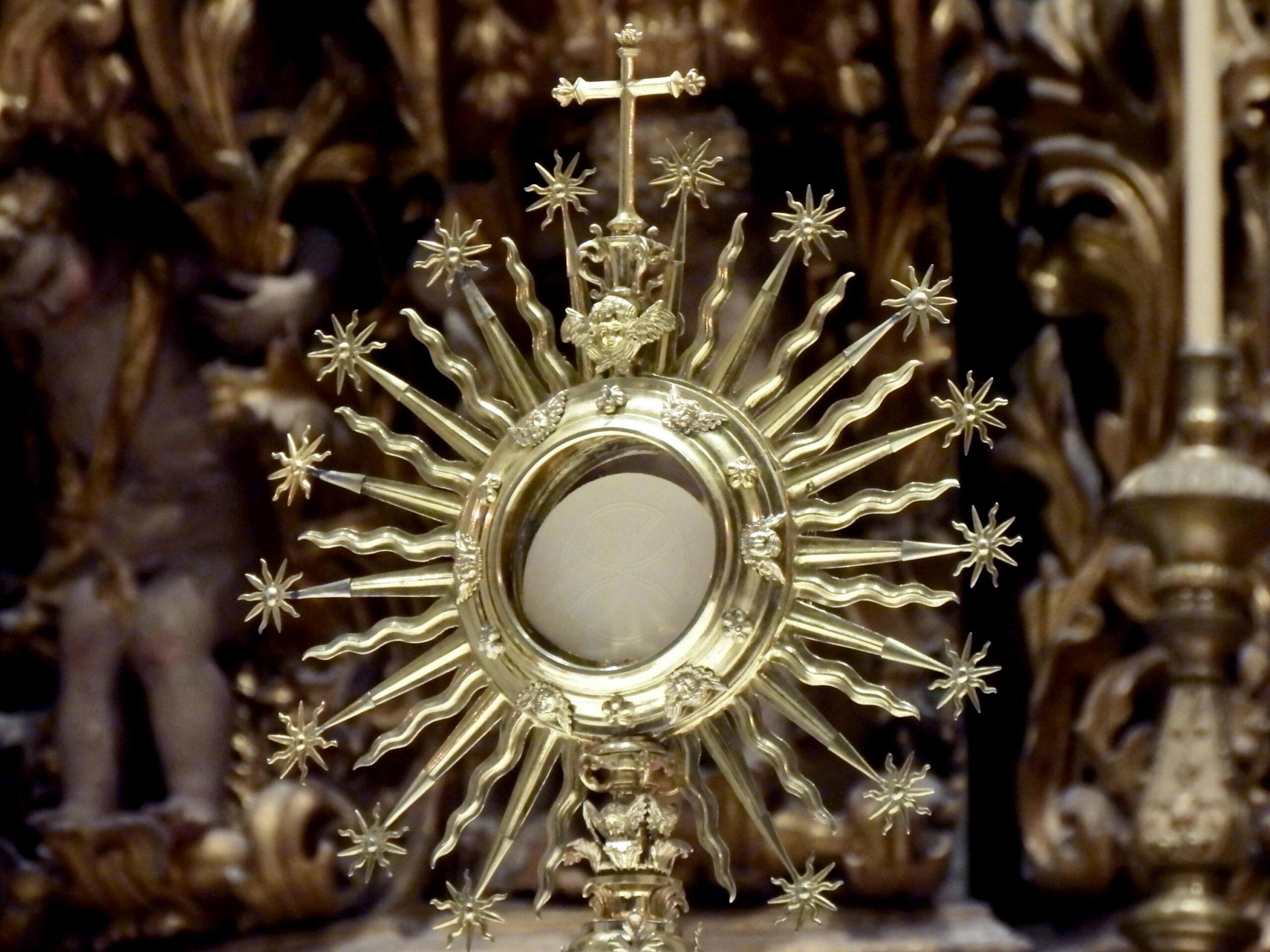
This finds its most profound expression in Eucharistic Adoration. In this practice, the priest consecrates the Host, which is then exposed in a monstrance, allowing us to spend time in the direct presence of Jesus. This is not a separate competition with the Mass, but its "extension." If we believe the Eucharist is truly Jesus, the only appropriate response is to adore Him.
When we spend a "Holy Hour" before the Blessed Sacrament exposed in the monstrance, we are participating in a specific vigil:
- The Vigil of Gethsemane: The concept of a "Holy Hour" draws its inspiration directly from the Garden of Gethsemane, where Jesus asked Peter, "So, could you not watch with me one hour?" (Matthew 26:40). It is a time to comfort the Heart of Christ, keeping watch with Him as He prays to the Father.
- The Gaze of Love: Eucharistic Adoration is phenomenologically distinct because it involves "gazing." It is a visual intimacy. As the peasant of Ars famously told St. John Vianney: "I look at Him and He looks at me." It is a reciprocity of presence where we expose our souls to the "Eucharistic Sun," allowing the radiation of grace to work on us often without words.
The Second Movement
Contrition ("Oops!")
The Metaphysics of the Broken Heart
What is it? Contrition is the honest admission that we have messed up. It is the "Oops!" — or more accurately, the "I am so sorry" — of the spiritual life. It is not just feeling bad about ourselves; it is a desire to repair the relationship with God that our mistakes have damaged.
The theological word "contrition" comes from the Latin conterere, which literally means "to grind to powder" or "to crush." This captures the seriousness of sin. It is the crushing of our stony pride so that God can rebuild us. As Psalm 51 says, "A broken and contrite heart, O God, you will not despise."
Mortal vs. Venial Sin
The Church distinguishes between two types of sin, and our contrition must account for both:
- Mortal Sin: A grave violation of God's law that destroys the life of grace in our soul. It requires grave matter, full knowledge, and deliberate consent.
- Venial Sin: A lesser offence that wounds our relationship with God but does not sever it.
Two Types of Sorrow: Peter vs. Judas
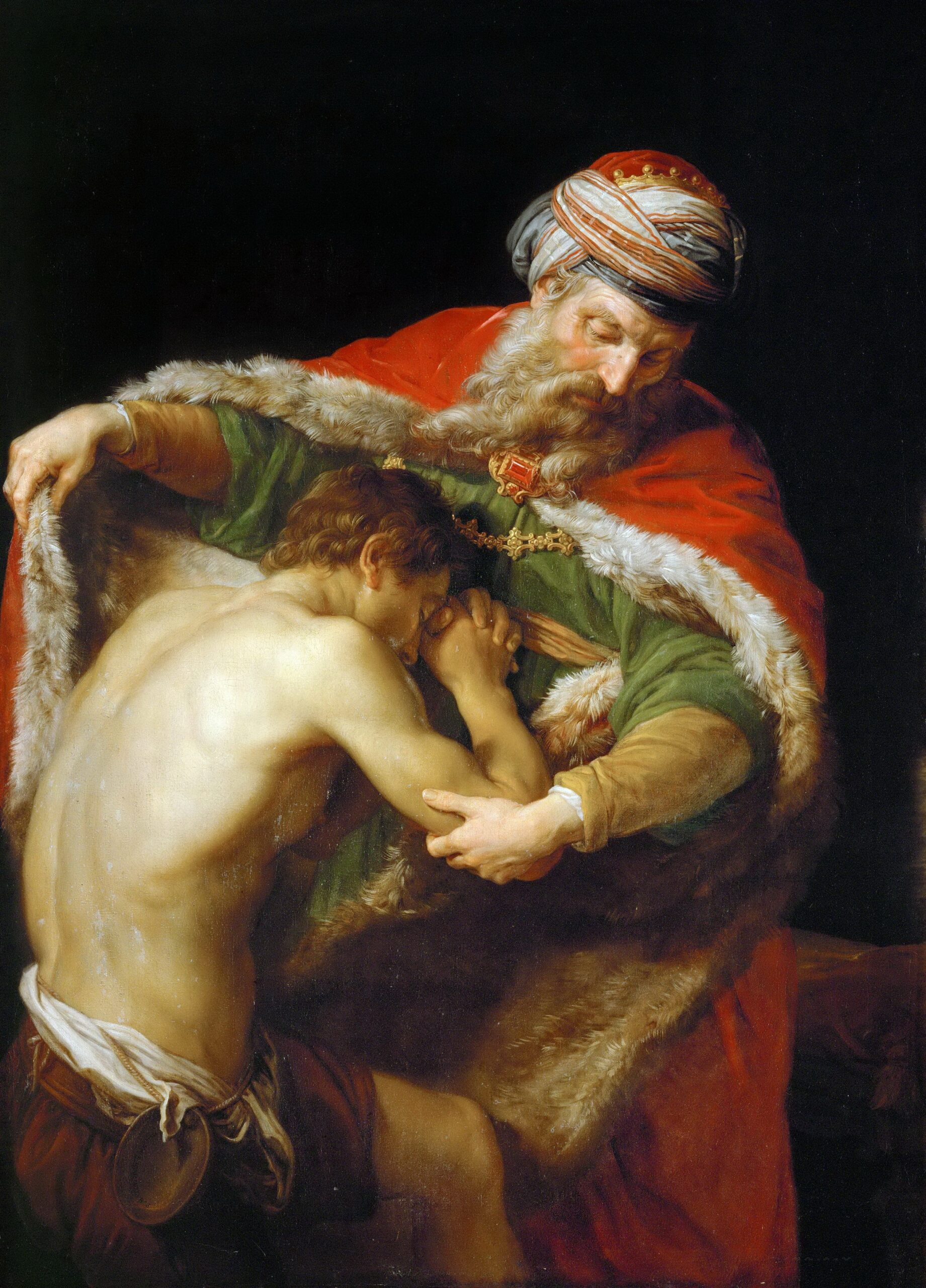
Scripture gives us two examples of sorrow during the Passion. Both Peter and Judas betrayed Jesus, and both felt terrible. But their sorrow was different:
- Judas (Despair): His sorrow turned inward. He regretted the consequences but lacked hope in mercy.
- Peter (Contrition): He "wept bitterly," but his sorrow kept him oriented toward Jesus. It was a "fruitful rain" animated by love.
Perfect vs. Imperfect Contrition
The Council of Trent distinguished between two valid motives for sorrow:
- Perfect Contrition (Love): I am sorry because I have offended God, whom I love above all things. This forgives sins immediately (provided I intend to go to Confession).
- Imperfect Contrition / Attrition (Fear): I am sorry because I fear hell or hate the ugliness of my sin. This is still a gift from the Holy Spirit, but it needs the Sacrament of Reconciliation to be effective.
In Confession, God takes our "imperfect" attrition and, through the priest's absolution, raises it to a saving act.
The Three Parts of Contrition
To practice this step, use this checklist to ensure your heart is fully engaged:
- Sorrow: Feeling a genuine regret in your soul for the sin.
- Hating the Sin: Detesting the action itself, while remembering that you are still God's beloved child.
- Resolution: A firm desire to change, where you "firmly intend with God's help to sin no more."
Once the weight of sin is lifted through God's mercy, the heart is naturally cleared to overflow with gratitude.
The Third Movement
Thanksgiving ("Thanks!")
The Eucharistia as Ontology
What is it? Thanksgiving is recognizing that everything we have — our life, our breath, our friendships — is a gift from God. It is simply saying "Thank you" to the Giver.
In the Catholic worldview, this isn't just a polite gesture; it is the truth of our existence. To exist is to be a gift from God. The Greek word for thanksgiving is Eucharistia. When we celebrate the Eucharist, we are performing the ultimate act of thanksgiving.
The Ancient Todah Sacrifice
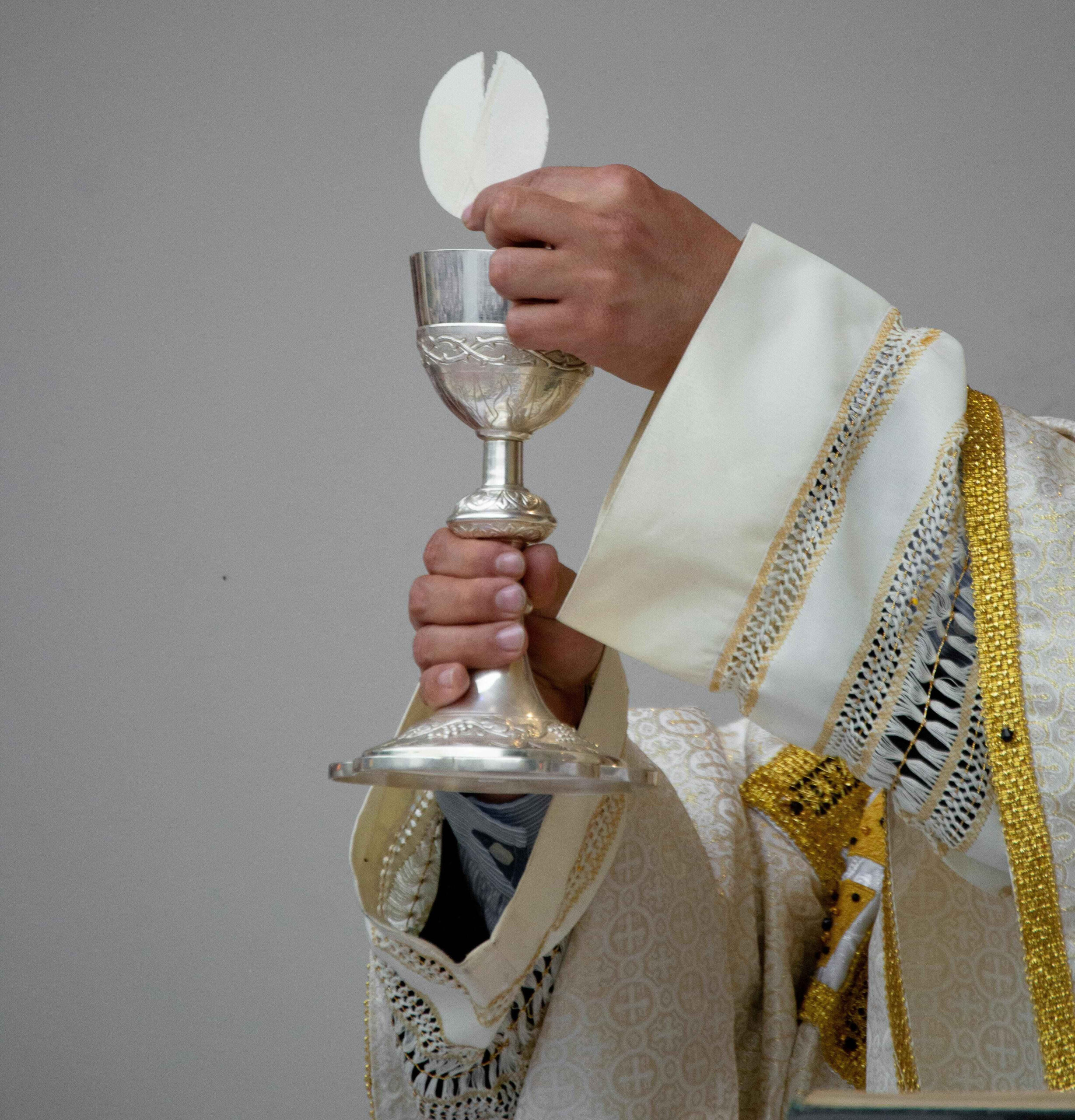
Modern scholars like Pope Benedict XVI have highlighted the link between the Mass and the ancient Jewish Todah sacrifice. The Todah was a thank-offering given by someone saved from death. Unlike other sacrifices, it involved unleavened bread and wine.
The Rabbis taught that in the Messianic age, "all sacrifices will cease except the Todah." The Mass is the fulfillment of this prophecy. It is the eternal thanksgiving of Christ, who has been delivered from death and now offers praise to the Father forever.
The Preface of the Mass
This theology is woven into the liturgy itself. At the Preface of the Mass, the priest invites us to "give thanks to the Lord our God." We respond, "It is right and just."
The priest then proclaims: "It is truly right and just, our duty and our salvation, always and everywhere to give you thanks..." This "always and everywhere" reminds us that gratitude is not just for good days; it is our constant duty as creatures.
The Sin of Ingratitude
St. Thomas Aquinas warned that ingratitude is a serious spiritual danger because it "dries up the fountain of piety." If we do not acknowledge the source of the water, we stop going to the well.
St. Thérèse of Lisieux offered a beautiful counter-image: she saw gratitude as a "pump." When we thank God for a small grace, He is moved to give a larger one. Gratitude draws down the waters of grace; ingratitude stops the flow.
The Fourth Movement
Supplication ("Please!")
Beggars Before God
What is it? Supplication is simply asking God for what we need. It is the "Please!" of prayer. Just as a child isn't afraid to ask their parents for help, we shouldn't be afraid to ask God for what we need.
St. Augustine famously said, "Man is a beggar before God." Supplication is the honest admission that we are not self-sufficient. But why do we need to ask if God already knows what we need?
The Mystery of Secondary Causality
St. Thomas Aquinas explains that we pray not to change God's mind, but to participate in His work. God is the First Cause of everything, but He dignifies us by making us "secondary causes."
Just as God wills for crops to grow through the "secondary cause" of the sun and rain, He wills for certain graces (like healing or peace) to enter the world through the "secondary cause" of our prayers. If the farmer doesn't plant, there is no harvest. If we do not pray, we may miss the harvest of grace God intended to give through us.
Trinitarian Structure and Spiritual Backup
Authentic Christian prayer has a structure: it is addressed to the Father, through the Son, and in the Holy Spirit. As 1 Timothy 2:5 reminds us, Christ is the "one mediator between God and men."
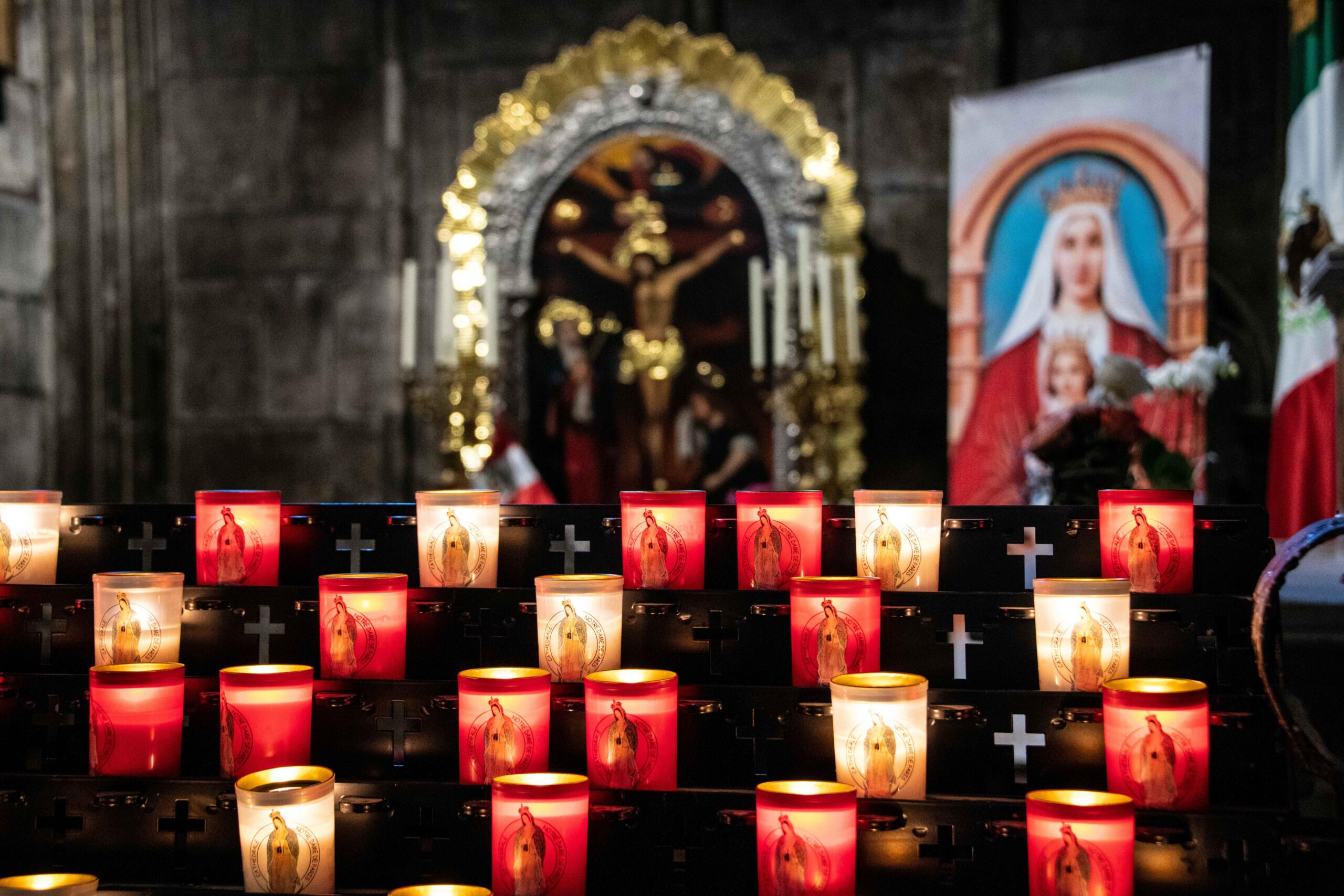
However, this does not exclude the prayers of others. We have "spiritual backup." When we ask saints to pray for us, we are asking for their intercession (enteuxis). We are not worshipping them; we are asking them to join our team. Standing above all is the Blessed Virgin Mary. Her prayers are powerful because of her role as the Mother of God. We are surrounded by a "cloud of witnesses" (Hebrews 12:1) who add their perfect prayers to our own.
The Perfect Prayer
The Mass as 'ACTS'
The ACTS model is not arbitrary; it mirrors the very structure of the Mass. When we go to Mass, we are living out the ACTS prayer in its highest form:
- C Contrition: We begin with the Penitential Rite (Kyrie Eleison, Confiteor), admitting our faults before God.
- A Adoration: We sing the Gloria and the Sanctus ("Holy, Holy, Holy"), and we kneel in adoration during the Consecration.
- T Thanksgiving: The entire Eucharistic Prayer is the "Sacrifice of Praise and Thanksgiving" offered to the Father.
- S Supplication: We offer the Prayers of the Faithful and recite the Our Father, asking for our daily bread and deliverance.
ACTS in Catholic Devotion
Rosary & Divine Office
This four-fold rhythm is the DNA of Catholic worship. It appears not only in the Mass but also in our most cherished devotions.
The Holy Rosary
The Rosary is a perfect ACTS prayer. We have Adoration in the "Glory Be," Contrition in the Fatima Prayer ("forgive us our sins"), Thanksgiving in the contemplation of the mysteries, and Supplication in the "Holy Mary, Mother of God, pray for us..."
Liturgy of the Hours
In the Divine Office, the Church prays without ceasing. We find Adoration in the hymns and psalms, Contrition in the penitential prayers, Thanksgiving in the Magnificat, and Supplication in the intercessions.
Practical Guide
15 Minutes with ACTS
How to use this model in your daily life:
1. Adoration (3 Mins)
Read a Psalm of praise (e.g., Psalm 8 or 148). Sit in silence and acknowledge God's majesty. Do not ask for anything yet.
2. Contrition (3 Mins)
Perform a brief examination of conscience. Review your day. Apologize to God. Resolve to go to Confession if needed.
3. Thanksgiving (3 Mins)
List 5 specific things from the last 24 hours you are grateful for. Gratitude changes your perspective.
4. Supplication (3 Mins)
Pray for others first (family, the Pope, enemies). Then, present your own needs to God with trust.
A Blueprint for Worship
The ACTS model is so much more than just a handy memory trick. It is a key that unlocks the deep, ancient structure of Catholic worship. It is a blueprint that transforms our prayer from a simple request into a profound conversation. When we see the system behind the ritual, it changes everything. By practising ACTS in our personal prayer, we are training our hearts to beat in rhythm with the entire Mystical Body of Christ.